
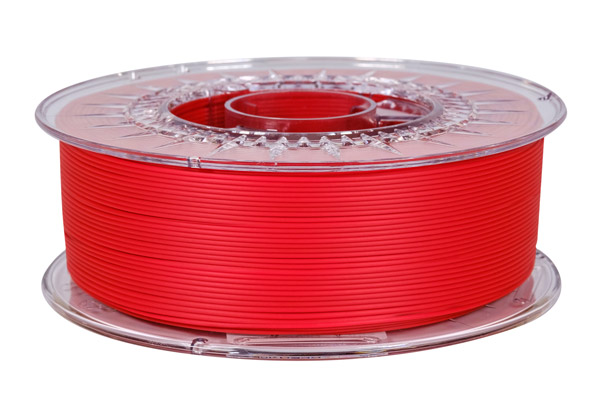
Most FDM prints placed outdoors fail within months — warped by summer heat, yellowed and brittle from UV, or cracked by moisture cycling through layer lines. Choosing the right material from the start avoids reprinting the same part every season.
The Three Enemies of Outdoor Prints
1. UV Radiation
Ultraviolet light breaks polymer chains directly — not a surface effect, but structural degradation that works its way through the part over time. The visible symptoms are yellowing and surface chalking, but the mechanical consequence is brittleness. PLA is the most vulnerable. PETG fares better but still degrades noticeably after 12–18 months of direct sun. ASA was formulated specifically to resist this: its acrylate rubber component is UV-stable by chemistry, not coating.
2. Heat
Outdoor temperatures in a Swiss summer regularly hit 35°C ambient — but inside a parcel box, car dashboard, or south-facing enclosure, surface temperatures can exceed 70°C. PLA’s glass transition sits around 60°C: it softens and creeps under load at temperatures easily reached in direct sun. PETG handles around 80°C. ASA’s Vicat softening point is 100–105°C — comfortably above anything a typical outdoor installation encounters.
3. Moisture
Rain itself rarely destroys a well-printed part, but moisture absorption causes dimensional change and weakens inter-layer adhesion in hygroscopic materials. PLA absorbs moisture and becomes brittle when cycled between wet and dry conditions over months. ASA and PETG are both low-absorption and hold up well to rain, condensation, and humidity fluctuations.
First Choice: ASA
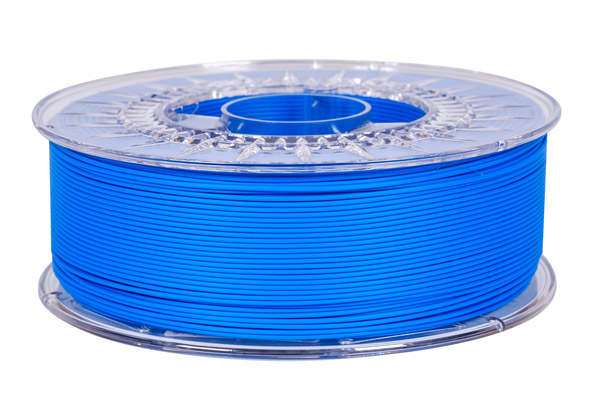
ASA (acrylonitrile styrene acrylate) is the outdoor-rated engineering grade among common FDM materials. It solves all three problems: UV-stable chemistry, high service temperature, and low moisture absorption. It also prints cleanly on any printer with a heated bed — no exotic hardware required.
| Parameter | Value |
|---|---|
| Nozzle temperature | 230–250°C |
| Bed temperature | 80–110°C |
| Enclosure | Recommended for parts >100 mm |
| Vicat softening point | 100–105°C |
| UV resistance | Excellent (acrylate chemistry, not coating) |
| Moisture absorption | Very low |
| Acetone-smoothable | Yes |
| Available colors | Black, Blue, Green, Orange, Red, Silver, White, Yellow |
Print tips for outdoor parts: Use a brim on large flat sections — ASA contracts more on cooling than PLA or PETG and corners can lift without one. Keep the part cooling fan off for the first 5–10 layers. An enclosure prevents draft-induced warping on parts over ~100 mm in any dimension. Ventilate your print space: like ABS, ASA off-gasses styrene at printing temperatures.
ASA is also acetone-smoothable, the same as ABS. Vapor smoothing eliminates layer lines and closes the surface, which further reduces moisture ingress paths on parts where sealing matters (sensor enclosures, outdoor housings).
Runner-up: PETG
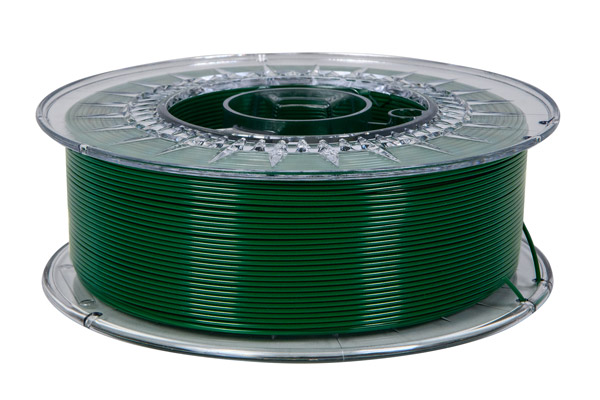
PETG is the right choice when the installation is in partial shade, the part isn’t load-bearing, and you want simpler printing. It handles moisture well, doesn’t warp on the bed like ASA can, and costs CHF 2.20/kg less.
The limitation is UV: PETG yellows and becomes brittle after 12–24 months of consistent direct sun exposure. For parts in a covered porch, under an eave, inside an outdoor enclosure with ventilation, or in a north-facing position, PETG holds up well for several years. For parts in direct sun year-round, reach for ASA.
| Parameter | Value |
|---|---|
| Nozzle temperature | 220–250°C |
| Bed temperature | 60–80°C |
| Service temperature | ~80°C |
| UV resistance | Fair (degrades in 12–24 months of direct sun) |
| Moisture absorption | Low |
| Available colors | Black, Blue, Green, Orange, Red, Silver, White, Yellow |
What Won’t Work Outdoors
PLA: Glass transition ~60°C. A PLA part left on a car dashboard, in a south-facing post box, or on a roof bracket in summer will warp — often catastrophically. Beyond heat, PLA is biodegradable: it degrades intentionally over months to years outdoors. Do not use PLA for any outdoor installation.
Standard ABS: Prints comparably to ASA but has essentially no UV resistance. A season of direct sun turns ABS yellow and brittle. ASA was developed to fix exactly this problem — there is no reason to use ABS outdoors when ASA is available.
TPU/flexible materials: Most elastomers are UV-sensitive. Flexible parts in shaded or protected positions (cable grommets, vibration mounts inside an enclosure) can work, but TPU degrades in sustained direct sun. Use only in shaded installations, and plan to replace periodically.
Design Tips for Outdoor Durability
- Wall count: 4+ perimeters on any structural or load-bearing part. Outdoor UV exposure works on the surface first — more wall material means longer service life before structural compromise.
- Infill: Gyroid or honeycomb at 25–40%. Gyroid has no straight internal channels that direct water toward the core if a surface crack develops.
- Drainage: Add drain holes (≥3 mm diameter) to any hollow enclosure or channel that faces upward. Standing water accelerates degradation and can freeze, cracking the part from inside.
- Thin walls: Avoid walls thinner than 1.2 mm in outdoor applications. UV degrades from the surface inward; thin walls lose structural integrity faster.
- Surface finish: A UV-resistant topcoat (automotive clear coat or UV-stable spray paint) adds years to any outdoor part, even ASA. Especially worth doing for parts in constant direct sun.
- Fasteners: Stainless or nylon hardware only. Steel fasteners rust and expand, splitting the plastic around them within one or two winters.
Quick Comparison: Outdoor Suitability
| Material | UV Resistance | Heat (Vicat/Tg) | Moisture | Direct Sun | Partial Shade |
|---|---|---|---|---|---|
| PLA | Poor | ~60°C | Fair | ✗ Avoid | ✗ Avoid |
| PETG | Fair | ~80°C | Low | ⚠ 1–2 yr | ✓ Several years |
| ASA | Excellent | 100–105°C | Very low | ✓ Long-term | ✓ Long-term |
ASA in stock — 8 colors, 1 kg and 2.3 kg spools, Swiss warehouse
ASA is our top recommendation for any outdoor application. PETG also available if ASA is more than your project needs.